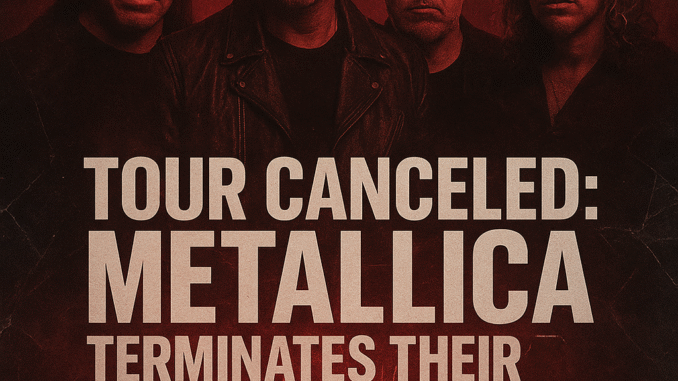
Tour Canceled: Metallica Officially Terminate the Most Expensive Tour Contract in Their History Amid Security Consciousness, Leaving Fans Frozen
In a shocking turn of events that has sent tremors through the global rock community, Metallica—one of the most influential heavy metal bands in history—has officially canceled what was billed as the most expensive tour contract in their illustrious four-decade career. The announcement, which came early this morning via the band’s official channels, has left millions of fans around the world heartbroken, confused, and desperate for answers.
A Dream Tour Turned Nightmare
The now-canceled world tour, which insiders say was worth well over $350 million, was set to be a monumental celebration of Metallica’s legacy—spanning continents, stadiums, and festivals. It promised to be a “global experience unlike any other,” blending cutting-edge stage production, immersive sound design, and a setlist that would travel across every era of the band’s catalog—from Kill ’Em All to 72 Seasons.
Fans had been preparing for months. Tickets sold out within minutes in major cities like London, Tokyo, São Paulo, and Los Angeles. Some even booked international travel just to be part of what was being dubbed “The Final Flame Tour”—a symbolic nod to Metallica’s enduring legacy and rumored hints of a farewell to large-scale touring.
But the flame was extinguished abruptly.
The Official Statement
Late Friday night, Metallica released a carefully worded statement that read:
> “In light of recent developments and increasing global security concerns affecting the safety of our crew, partners, and most importantly, our fans, we have made the difficult decision to terminate our upcoming world tour. This decision was not made lightly. We are heartbroken, but safety and responsibility must always come first. We appreciate the loyalty and patience of our fans, and we will continue to find new ways to connect through music.”
The brief announcement was signed collectively by all four members—James Hetfield, Lars Ulrich, Kirk Hammett, and Robert Trujillo—and immediately went viral, sparking emotional responses across social media platforms.
Behind the Scenes: What Really Happened?
While the band’s statement emphasized “security consciousness,” industry insiders suggest that the decision was influenced by a combination of factors—some known, others shrouded in mystery.
Several sources close to the production hinted that there were heightened concerns about large-scale venue security, particularly following recent incidents at major concerts around the world where safety breaches led to crowd panic and injuries. The logistics of ensuring Metallica’s trademark pyrotechnics, stage rigs, and massive audience gatherings met new global safety standards reportedly became too complex and costly to maintain.
Another major factor, according to leaked internal discussions, was the rising insurance costs and geopolitical instability in several of the tour’s planned destinations. Some regions had issued updated advisories that made travel and setup nearly impossible under the band’s strict safety codes.
Still, others whisper that creative disagreements and exhaustion may have played a part. “This wasn’t just about external threats,” one insider shared anonymously. “The team has been under massive pressure to deliver something unprecedented. It’s possible that internally, everyone realized the scale had become unsustainable.”
Fans React: Shock, Anger, and Heartbreak
Unsurprisingly, the cancellation triggered a wave of intense reactions from Metallica’s devoted fanbase. Within hours, hashtags like #MetallicaCanceled, #BringBackTheFlame, and #MetallicaForever trended across Twitter (X), Instagram, and TikTok.
Some expressed disappointment but voiced understanding for the band’s decision:
> “Metallica has always put their fans first. If they’re saying it’s unsafe, I trust them. But damn, this hurts.” — @MetalMama82
Others were more critical:
> “Months of saving, travel plans, and anticipation… all gone. This feels unreal. Metallica, please say it’s temporary.” — @Thrash4Life
Fan clubs across Europe and South America have begun organizing tribute events and online live streams to “keep the Metallica spirit alive,” hoping the band might reconsider or reschedule under safer conditions.
Industry Impact: A Shockwave Through Rock Music
The cancellation doesn’t just affect fans—it sends ripples across the entire live music industry. Promoters, venue operators, and equipment partners who had invested heavily in the logistics of Metallica’s mega-tour now face enormous financial losses.
“This was supposed to be the tour that redefined rock production standards,” said an industry executive from Live Nation. “Metallica’s scale sets the bar. If they’re pulling out due to security concerns, it will likely influence how all major tours are structured moving forward.”
Analysts predict that insurance premiums for high-capacity concerts could skyrocket in 2026 and beyond. Smaller bands who rely on major festival circuits might also feel the sting as promoters tighten safety budgets and renegotiate contracts.
A History of Resilience
Despite the disappointment, long-time followers know that Metallica has never been a band to shy away from adversity. From Hetfield’s personal battles with addiction to the infamous Napster controversy and creative clashes captured in Some Kind of Monster, Metallica’s journey has always been one of survival and reinvention.
In a 2022 interview, frontman James Hetfield reflected on the band’s evolution:
> “We’ve been through fires, literal and metaphorical. Every setback has been an opportunity to rediscover why we do this. It’s not about perfection—it’s about connection.”
That sentiment may now prove prophetic, as the band looks for new ways to connect with fans without relying on massive tours.
What’s Next for Metallica?
While the world mourns the loss of what could have been a historic event, speculation is already mounting about what’s next. Some insiders suggest Metallica could pivot toward intimate, smaller-scale performances—perhaps a global series of live-streamed studio sessions or acoustic sets with limited audiences. Others hint that the band may refocus on documentary projects, possibly expanding on the success of Metallica: M72 World Tour – Live from Arlington and their recent collaborations with streaming platforms.
Whatever direction they choose, one thing remains clear: Metallica’s influence will not fade. Their legacy extends far beyond the stage—it’s etched into the DNA of modern rock and metal itself.
A Pause, Not an End
As the dust settles on this shocking announcement, fans are left to grapple with a mix of disappointment and gratitude. Disappointment that the long-awaited tour will never take place; gratitude that their favorite band continues to prioritize safety and integrity over profit.
In the grand story of Metallica—a story marked by defiance, reinvention, and raw emotion—this moment will likely stand as another defining chapter. Whether it leads to a new creative rebirth or simply a prolonged pause, one truth remains: Metallica has never walked away from their fans for long.
For now, the amps are silent. The stage lights are dimmed. But the echoes of Enter Sandman, Master of Puppets, and Nothing Else Matters still ring through the hearts of millions—reminding the world that even in cancellation, Metallica remains untouchable.
Leave a Reply