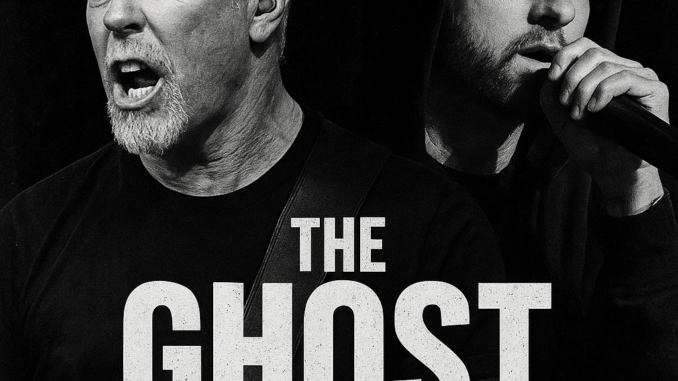
METALLICA X EMINEM
Title: The Ghost Call
When pop culture collides with raw rebellion, the result isn’t a compromise—it’s an earthquake. Few pairings could send shockwaves through music history quite like Metallica and Eminem, two titans forged in different fires yet bound by the same relentless intensity. The Ghost Call isn’t just a collaboration; it’s a reckoning. A moment where metal’s thunder meets hip-hop’s razor-sharp truth, proving that unstoppable forces don’t cancel each other out—they multiply.
For decades, Metallica have stood as the iron backbone of heavy music. Their sound is steel and sweat, born from garages, shaped in stadiums, and sharpened by defiance. Every riff carries the weight of rebellion, every drum hit like a war march. They didn’t follow trends—they survived them. Metallica became a language for outsiders, fighters, and those who refused to be silent.
Eminem, on the other hand, carved his legacy with words instead of strings—though just as violently. His verses are blunt-force trauma, confessional and confrontational. Where Metallica roars, Eminem dissects. Where they summon storms, he summons ghosts—of trauma, addiction, rage, and survival. Both artists emerged from struggle, turning pain into power, chaos into craft.
The Ghost Call is born in that shared DNA.
The track opens not with noise, but with tension. A low, haunting guitar hum creeps in like a memory you can’t outrun. Then comes Eminem—quiet, almost whispered—delivering a verse that feels like a late-night voicemail from the past. He raps about demons that never leave, voices that call when the lights go out, the price of fame, and the scars success doesn’t heal. This isn’t Slim Shady the provocateur—it’s Marshall Mathers, raw and reflective, standing face to face with his own shadow.
Then the switch flips.
Lars Ulrich’s drums crash in like a door kicked open. James Hetfield’s guitar tears through the silence, and suddenly the song erupts into controlled chaos. Hetfield’s voice enters not as a chorus, but as a challenge—gravelly, commanding, almost prophetic. He doesn’t echo Eminem’s words; he answers them. Where Eminem confesses, Hetfield confronts. Where one wrestles with ghosts, the other dares them to step forward.
The chorus is monumental. Metallica’s wall of sound collides with Eminem’s precision, creating something neither genre could achieve alone. It’s not rap over metal, or metal backing rap—it’s a fusion built on respect. Each artist leaves space for the other to breathe, then strikes when it matters most.
Lyrically, The Ghost Call is about legacy—the voices that follow you when the applause fades. It asks hard questions: What do you owe your past? Can you ever escape who you were? And what happens when the world worships the armor but ignores the wounds beneath it?
The bridge strips everything back again. A lone guitar. A single heartbeat of percussion. Eminem delivers his most cutting lines here—about survival, about being misunderstood, about carrying the weight of millions of expectations. Then Hetfield returns, not screaming, but steady, almost calm, like a veteran who’s already faced the abyss and lived to tell the tale.
By the final minute, the song becomes a storm. Guitars roar, drums pound, and Eminem’s rapid-fire delivery slices through the noise with surgical clarity. It’s aggressive, emotional, and unapologetic. The ending doesn’t resolve—it echoes. The last note hangs in the air like a ghost that refuses to leave.
The Ghost Call isn’t designed for radio comfort. It’s designed for impact. It speaks to fans who grew up on distorted guitars and late-night lyrics, to those who know music isn’t just entertainment—it’s survival. Metallica and Eminem don’t meet in the middle; they meet at the edge.
And when the call comes from the past, this time, they answer it together.
Leave a Reply