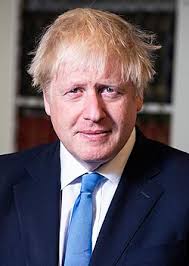
Leaders in the UK have stated that they plan to introduce a new president….
n a surprising political development that has sparked nationwide debate, leaders across the United Kingdom have announced that they are considering the introduction of a new presidential role within the country’s political system. The proposal, which is still in its early stages, could mark one of the most significant constitutional changes in modern British history.
For centuries, the United Kingdom has operated under a constitutional monarchy, where the monarch serves as the ceremonial head of state while the government is led by the Prime Minister and Parliament. However, recent discussions among political leaders and constitutional experts suggest that the country may explore the possibility of creating a presidential position that would carry certain national responsibilities.
Supporters of the proposal argue that the move could modernize the political system and provide a clearer separation between ceremonial duties and political leadership. According to several lawmakers who have spoken about the idea, the potential presidential role would likely focus on representing the nation both domestically and internationally while remaining largely independent from daily government operations.
Government officials have emphasized that the proposal is still under discussion and that no final decisions have been made. Several committees and advisory groups are expected to review the concept in detail, examining how such a position might function within the UK’s existing constitutional framework.
One senior political figure explained that the idea emerged during broader conversations about constitutional reform. “The United Kingdom has a long and proud political tradition,” the official said. “However, every nation must occasionally reflect on its institutions to ensure they continue to serve the public effectively in a modern world.”
The suggestion of introducing a presidential role has immediately generated mixed reactions across the political spectrum. Some politicians believe it could strengthen national representation and provide a unifying figure who stands above party politics. Others, however, have raised concerns about how such a position might affect the existing balance of power between the monarchy, Parliament, and the government.
Constitutional scholars have also weighed in on the debate. Many experts note that the UK’s current system is deeply rooted in history and tradition, making any major structural change a complex and sensitive undertaking. They point out that altering the role of the head of state or introducing a new executive position would likely require extensive legal reforms and possibly even a nationwide referendum.
Public reaction to the news has been equally varied. Some citizens have expressed curiosity and interest in the idea, particularly younger voters who often support modernization of political institutions. Others remain skeptical, arguing that the current system has provided stability for generations and does not require such dramatic changes.
Political analysts say that the proposal may reflect broader global trends. In many countries around the world, presidential systems or hybrid models have been adopted to balance executive authority with democratic accountability. However, experts caution that each country’s political structure is unique and must reflect its own historical, cultural, and institutional context.
If the plan were to move forward, lawmakers would need to answer several critical questions. These include determining how a president would be selected, defining the scope of the role’s powers, and clarifying how the position would interact with the Prime Minister and Parliament.
Some early proposals suggest that a president could be elected directly by the public, providing citizens with a new opportunity to participate in national leadership selection. Others have suggested that the role could be appointed through Parliament or an electoral college-style system to maintain continuity with existing traditions.
In addition to political considerations, there are also practical challenges to address. Establishing a presidential office would require new administrative structures, staff, and resources. Lawmakers would also need to ensure that any new position complements rather than conflicts with existing government functions.
Critics of the proposal warn that introducing a new leadership role could create confusion or duplication of authority. They argue that the UK already has clearly defined institutions and that adding another high-level office might complicate governance rather than improve it.
Despite these concerns, supporters insist that exploring constitutional reform is a healthy part of democratic evolution. They argue that examining new ideas does not necessarily mean abandoning traditional institutions but rather ensuring they continue to meet the needs of a changing society.
As the debate continues, political leaders have pledged to involve the public in the discussion. Several members of Parliament have suggested that consultations, public forums, and expert panels could be organized to gather feedback from citizens and stakeholders across the country.
The coming months are expected to bring further clarification about the proposal’s direction. Parliamentary committees may begin reviewing comparative political systems, studying how other countries structure their executive leadership and what lessons might be applicable to the United Kingdom.
Meanwhile, opinion polls are likely to play a significant role in shaping the conversation. Early surveys could provide insight into how the public views the potential introduction of a presidential role and whether there is significant support for such a change.
Regardless of the outcome, the announcement has already triggered one of the most lively constitutional discussions in recent years. Political commentators note that debates about national leadership structures often reveal deeper questions about identity, governance, and the future direction of the country.
For now, officials stress that the idea remains only a proposal. Any formal change to the United Kingdom’s political structure would require careful consideration, legislative approval, and potentially the direct consent of voters.
Leave a Reply