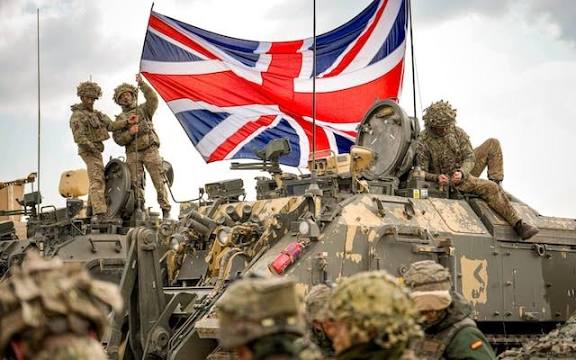
Breaking news: Earlier today, the United Kingdom’s leader stated that the country may soon take military action against Iran if the situation continues to escalate…The Guardian
Reuters
What is the extent of the UK’s involvement in the Middle East war?
Iranian-made drone hits British air base in Cyprus
March 2
March 2
Breaking News: UK Leader Signals Possible Military Action as Iran Tensions Escalate
London, United Kingdom — Tensions in the Middle East have intensified dramatically after new statements from the British government indicated that the United Kingdom may be forced to consider stronger military responses if the security situation involving Iran continues to deteriorate. The remarks come at a time when the region is already experiencing significant instability following missile attacks, drone strikes, and rising fears of a wider international conflict.
Earlier today, Britain’s political leadership warned that the UK would take necessary steps to defend its citizens, military personnel, and allies in the region if the situation escalates further. Officials stressed that the government prefers diplomatic solutions but would not hesitate to act if national security or allied interests were threatened.
Growing Tensions in the Middle East
The warning comes amid one of the most volatile periods in the Middle East in recent years. A series of military exchanges involving Iran and its adversaries has raised alarm among global leaders. Several countries have increased their military readiness, while international organizations have called for calm and dialogue.
Recent attacks and retaliatory actions have further complicated the situation. Reports indicate that Iranian drones and missiles have targeted multiple locations across the region, including areas where Western forces are stationed. In response, allied nations have strengthened air defenses and deployed additional military equipment.
The UK has also increased its military presence in key locations in the Middle East. Fighter jets and defensive systems have been positioned at strategic bases, particularly in areas considered vulnerable to potential missile attacks. These deployments are part of a broader effort to protect British personnel and prevent further escalation.
Britain’s Defensive Role
Despite growing concerns about the conflict spreading, the British government has repeatedly emphasized that its current military operations are primarily defensive. Officials say British aircraft and defense systems have already been involved in intercepting incoming missiles and drones aimed at allied territories. �
GOV.UK
In a recent statement, the government explained that British jets are operating as part of coordinated defensive missions with international partners. The primary goal of these operations is to prevent attacks that could threaten civilian populations and military personnel stationed in the region.
The government also confirmed that the United States has requested permission to use certain British military bases for limited operations aimed at disabling Iranian missile launch sites. British authorities agreed to the request, arguing that such actions are necessary to prevent further missile strikes across the region. �
GOV.UK
Officials insist that this decision is based on the principle of collective self-defense under international law.
Attacks on British Interests
One of the most concerning developments occurred when a suspected Iranian-made drone struck a British Royal Air Force base in Cyprus. Although the attack caused only limited damage and no casualties, it marked a significant escalation because the facility hosts thousands of British personnel and plays a major role in regional military operations. �
Reuters
Defense analysts say the incident demonstrates how the conflict could quickly draw more countries into direct confrontation. If attacks on British installations or personnel continue, pressure on the government to respond more forcefully could increase.
Security experts warn that such incidents create a dangerous cycle of retaliation. Each strike increases the likelihood that other countries will become involved, potentially transforming the regional conflict into a broader international crisis.
Political Debate Inside the UK
Within Britain, the situation has sparked intense debate among political leaders and policymakers. Some politicians argue that the government must take stronger action to deter further Iranian attacks, while others warn against becoming deeply involved in another prolonged conflict in the Middle East.
Opposition figures have suggested that the Royal Air Force should consider targeted strikes on Iranian missile sites if British bases continue to face threats. Supporters of this approach claim that decisive action could prevent future attacks and demonstrate that the UK will defend its interests and allies.
However, other lawmakers caution that military escalation could lead to unpredictable consequences. They argue that diplomacy and international cooperation should remain the primary tools for resolving the crisis.
Public opinion is also divided. While many citizens support measures to protect British troops and allies, there is widespread concern about the possibility of the UK being drawn into a large-scale war.
International Reactions
Around the world, governments are closely monitoring the situation. Several European leaders have urged Iran to return to negotiations and seek a diplomatic solution to the growing conflict. �
The Guardian
Countries including France and Germany have emphasized the importance of preventing further escalation. They have called for restraint from all parties involved, warning that continued violence could destabilize the entire region.
Meanwhile, global powers such as Russia and China have expressed their own concerns and have called for an immediate reduction in hostilities. Diplomatic efforts are ongoing, but the rapidly evolving situation has made progress difficult.
Strategic Importance of the Region
The Middle East remains a critical region for global security, energy supplies, and international trade. Any major conflict involving Iran could have far-reaching consequences for the world economy and geopolitical stability.
Iran occupies a key position in the region and has significant influence through alliances and proxy groups. Analysts say that any direct military confrontation involving Iran could quickly spread beyond its borders, affecting neighboring countries and global shipping routes.
The United Kingdom, along with other Western allies, maintains military bases and personnel across the region. These installations are designed to support international security operations and protect vital trade routes.
Because of these strategic interests, Britain has a strong incentive to prevent instability from spreading further.
Diplomatic Efforts Continue
Despite the rising tensions, British officials insist that diplomacy remains the preferred path forward. Government representatives have continued to engage with international partners and regional leaders in an effort to reduce hostilities.
Negotiations and diplomatic channels remain open, though progress has been slow. Analysts say that trust between the opposing sides is currently very low, making it difficult to achieve quick breakthroughs.
Still, many experts believe that diplomatic engagement is the only realistic way to avoid a full-scale regional war.
Uncertain Future
As the crisis unfolds, the world is watching closely. Military movements, political statements, and diplomatic efforts in the coming days will likely determine whether tensions ease or escalate further.
For now, the British government maintains that it is prepared to defend its citizens and allies while continuing to pursue peaceful solutions. However, officials acknowledge that the situation remains unpredictable and could change rapidly.
If attacks continue or the conflict spreads, the United Kingdom may face increasingly difficult decisions about its role in the region. The coming weeks could prove crucial in determining whether diplomacy prevails or whether the Middle East moves closer to a broader and more dangerous confrontation
Leave a Reply